A driveway bollard looks simple until you start comparing the options. Some homeowners want a barrier that stays in place every day, while others need to open the driveway for vehicles, visitors, deliveries, or occasional access. That is why the choice between removable and fixed bollards should start with how the driveway is actually used, not just with the appearance of the product. If you are comparing options now, start by reviewing the available parking bollards and identifying which designs match the way vehicles enter and leave your property.
For many homes, the real question is not whether a bollard is useful but whether the barrier should be permanent or movable. Fixed bollards can define a protected area continuously, while removable or lockable designs can preserve access when needed. The best choice depends on traffic flow, driveway width, mounting surface, the location of gates or garage doors, and how often the protected area needs to reopen.
What Is the Difference Between Removable and Fixed Bollards?
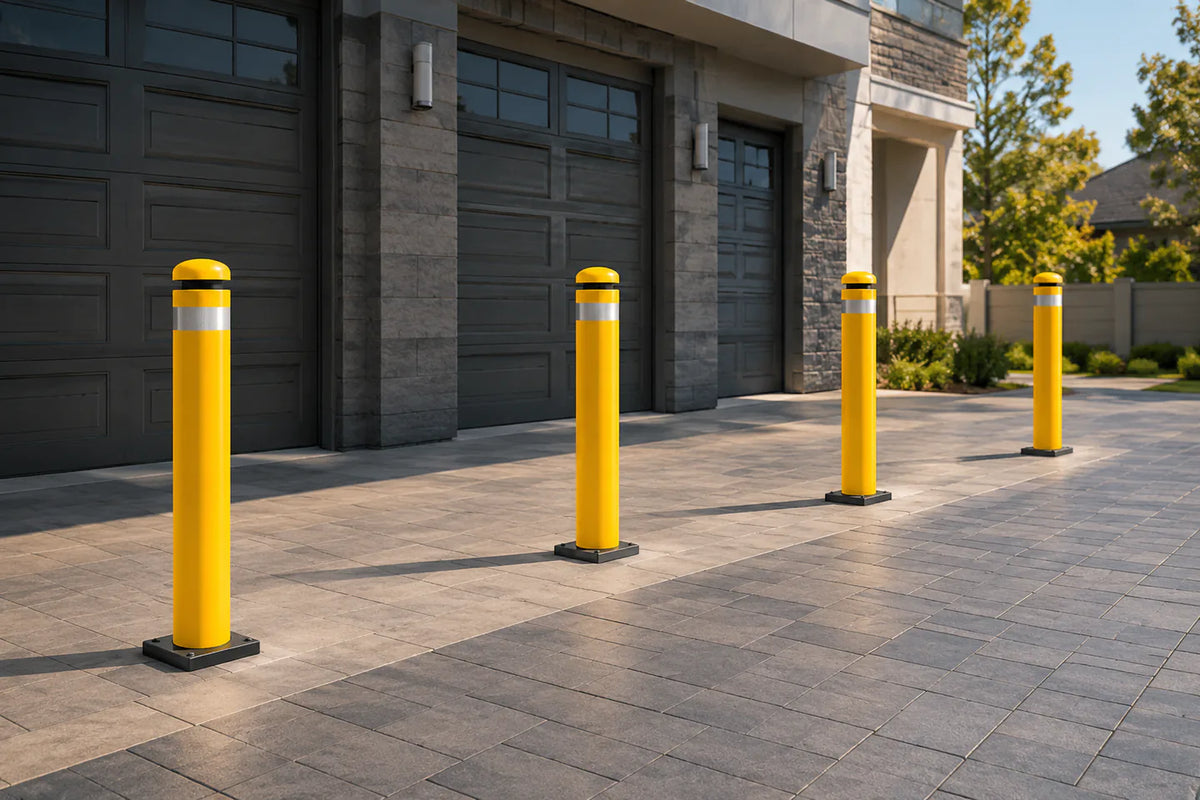
A fixed bollard is intended to remain in one position after installation. Depending on the specific model, it may be surface-mounted to an existing concrete area or installed using another permanent mounting method. Once installed, it becomes part of the driveway or property layout.
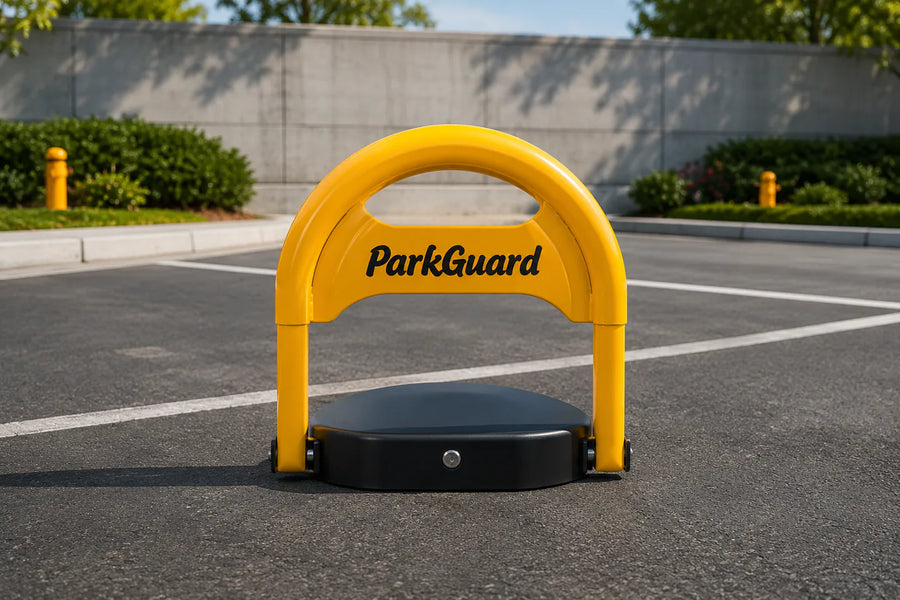
A removable bollard is designed around access flexibility. Instead of remaining permanently in the vehicle path, it can be unlocked, folded, removed, or repositioned depending on the product design. This makes removable options useful where the owner wants a visible parking or access barrier without permanently closing the route.
The distinction sounds straightforward, but it has a major effect on everyday usability. A bollard that works perfectly beside a garage wall may be inconvenient in the middle of the driveway. Likewise, a removable bollard may provide more flexibility than necessary in an area that never needs vehicle access.
When Does a Fixed Bollard Make More Sense?
Fixed bollards generally make the most sense where the protected boundary does not need to move. Think about areas beside a driveway, near an exposed wall, around utility equipment, next to a garage corner, or along a pedestrian edge.
In these locations, permanent placement can simplify the layout. There is no need to unlock, remove, lower, or store the bollard every time a vehicle arrives.
1. Protecting the Sides of a Driveway
Some residential driveways pass close to walls, columns, landscaping, utility equipment, garage doors, or other property features. A fixed bollard positioned outside the normal vehicle path can create a clear physical reference point for drivers.
This type of placement can be especially useful where the driveway is narrow or where vehicles regularly turn while entering or backing out.
2. Creating a Permanent Boundary
If a section of the property should never be driven over, a fixed bollard can provide a permanent visual and physical boundary. Examples might include a pedestrian walkway, landscaped edge, building corner, or area containing equipment.
Because access does not need to be restored, there is little benefit in selecting a removable mechanism.
3. Avoiding Daily Operation
Every movable device introduces an extra action. A homeowner may need to unlock it, lower it, remove it, store it, or return it to position. That is reasonable when flexibility is important, but unnecessary when the protected area stays closed.
If you know the location should remain blocked continuously, a fixed solution is often simpler.
When Is a Removable Bollard Better for a Driveway?
Removable bollards become more useful when the protected area is also an active vehicle route. A common example is the entrance to a private driveway or individual parking space.
The owner may want the area clearly restricted while away from home, but fully open when entering or leaving.
1. Driveways That Need Regular Vehicle Access
Installing a permanent bollard directly across an active driveway would obviously prevent normal vehicle use. A removable, fold-down, or lockable design solves that problem by allowing the barrier to change between an open and closed position.
This creates a simple decision rule: if the bollard sits directly in the route vehicles must use, some form of movable access is usually more practical.
2. Reserved Residential Parking Spaces
In shared residential developments, apartment properties, townhomes, or small multi-unit buildings, a designated parking space can sometimes be difficult to keep clearly reserved.
A movable parking barrier can help identify that the space is controlled while still allowing the authorized driver to use it normally.
3. Occasional Service or Delivery Access
Some areas remain closed most of the time but occasionally need access for service vehicles, landscaping crews, maintenance contractors, or deliveries.
In these situations, a removable system can provide a more adaptable layout than a permanently closed barrier.

Removable vs. Fixed Bollards: Quick Comparison
| Consideration | Fixed Bollard | Removable / Movable Bollard |
|---|---|---|
| Permanent boundary | Well suited | Usually unnecessary |
| Active driveway entrance | Usually unsuitable in vehicle path | Better suited |
| Daily operation required | No | Usually yes |
| Flexible vehicle access | Limited | High |
| Protecting a fixed property edge | Often suitable | Possible but may add unnecessary complexity |
| Reserved parking space | Usually impractical in the space | Often more practical |
Start With the Problem You Are Trying to Solve
One of the easiest mistakes when shopping for driveway protection is choosing the product first and defining the problem second.
Instead, write down exactly what you want the bollard to do.
For example:
- Stop vehicles from entering part of the property.
- Keep an assigned parking space available.
- Protect the corner of a garage.
- Mark the edge of a narrow driveway.
- Create separation between vehicles and pedestrians.
- Restrict access when the homeowner is away.
Once the objective is clear, the permanent-versus-removable decision often becomes much easier.
Think About How Often the Bollard Will Need to Move
Frequency matters.
If you expect to move a bollard several times per day, convenience becomes a major consideration. A system that feels simple during installation can become annoying if daily operation requires too many steps.
On the other hand, if access only needs to open a few times per month, a straightforward removable design may be entirely practical.
Ask yourself:
- How many times per day will vehicles pass this point?
- Who will operate the bollard?
- Will more than one household member need access?
- Does the device need to remain easy to use in rain or cold weather?
- Where will a removable component be stored when not in place?
These everyday questions are often more useful than comparing products only by appearance.
Check the Driveway Width Before Choosing a Layout
Bollard placement should support safe, practical vehicle movement.
A narrow driveway may require careful positioning so that a bollard does not reduce usable clearance more than expected. A wide driveway may require more than one control point if the goal is to prevent a vehicle from simply driving around the barrier.
Before buying, measure:
- The full usable driveway width.
- The width of the vehicle path.
- Distance to walls, gates, landscaping, and garage openings.
- Clearance needed for doors, mirrors, and turning movements.
- The proposed distance between multiple bollards.
Do not rely on visual estimates. A few inches can make a noticeable difference in a tight residential driveway.
Consider the Mounting Surface
The mounting surface is one of the most important installation checks.
Surface-mounted bollards typically depend on a suitable solid base and appropriate anchors. Other removable systems may require sockets, bases, or specific mounting hardware.
Before installation, confirm the product instructions and inspect the actual site. Concrete thickness, condition, cracking, underground utilities, drainage, slope, and nearby edges can all affect the installation approach.
If the surface condition is uncertain, consult a qualified installer rather than assuming that every paved area is suitable for the same mounting method.
Fixed Does Not Automatically Mean “More Secure”
It is tempting to treat fixed and removable as simple security levels, but that is not a reliable way to compare them.
Actual performance depends on the specific product, dimensions, materials, mounting system, substrate, installation quality, spacing, and intended use.
A permanently mounted bollard is not automatically crash-rated, and a removable bollard is not automatically weak. Those are product-specific engineering questions.
Unless a product explicitly provides a tested impact rating or recognized certification, do not assume it is designed to stop a high-speed vehicle.
For residential properties, many bollards are used primarily for access management, parking control, visibility, property separation, and low-speed deterrence rather than engineered vehicle-impact protection.
Appearance Matters More at a Home Than Many Buyers Expect
Residential safety equipment becomes part of the property’s visual environment.
A large commercial-looking barrier may perform the required function but still feel out of place beside a carefully designed home entrance.
Consider:
- Color.
- Height.
- Shape.
- Reflective markings.
- Whether the bollard is visible from the street.
- How it looks in both the open and closed position.
Visibility is useful for drivers, but the right level of visibility depends on the site. A driveway entrance near public traffic may benefit from a highly visible finish, while a bollard beside a garage may be selected more for compatibility with the property.
What About Fold-Down Bollards?
Fold-down bollards sit between fully fixed and fully removable designs.
Instead of removing the bollard from the site, the user lowers it when access is needed and raises it again afterward.
This can eliminate the need to store a loose bollard, although the lowered unit still occupies space on the ground. That means you need to consider tire clearance, vehicle underbody clearance, dirt accumulation, and whether the folded position interferes with normal use.
For some driveways and reserved spaces, a fold-down design can be a useful compromise between permanent mounting and flexible access.
Can You Mix Fixed and Removable Bollards?
Yes. In fact, a mixed layout can make sense on some properties.
For example, fixed bollards could protect the sides of an entrance while a removable bollard controls the vehicle opening in the center.
This approach allows different products to solve different problems instead of asking one bollard type to do everything.
The layout should still be checked carefully for vehicle clearance and practical access.
Common Driveway Bollard Mistakes
Choosing Before Measuring
Buying first and measuring later can leave you with a product that does not fit the usable vehicle path.
Blocking Normal Vehicle Movement
A bollard should not create a new obstacle that makes everyday parking unnecessarily difficult.
Ignoring the Open Position
With a movable bollard, consider both states. Where does it go when the driveway is open?
Assuming Every Bollard Is Impact-Rated
Only rely on ratings or standards explicitly supported by the product documentation.
Installing Too Close to an Edge
Mounting near concrete edges, joints, cracks, or damaged areas may require additional evaluation. Follow the installation instructions for the specific product.
Forgetting Other Household Users
A system that only one person understands or can operate may become inconvenient quickly.
How to Choose Between Removable and Fixed Bollards
Use this simple decision process.
Choose a fixed bollard when:
- The location should remain closed to vehicles.
- The bollard sits outside the normal driving route.
- You want a permanent boundary or property marker.
- Daily access flexibility is not required.
Consider a removable, lockable, or fold-down option when:
- The bollard sits directly in an active driveway.
- You need to reopen the area for authorized vehicles.
- You are controlling a private parking space.
- Occasional service or delivery access is required.
Once you know which category matches the use case, compare the actual dimensions, mounting requirements, operating method, included components, and product instructions before ordering.
Frequently Asked Questions
Are removable bollards good for residential driveways?
They can be a practical choice when a driveway needs to alternate between restricted and open access. Suitability depends on the specific product, driveway layout, mounting surface, and how frequently the bollard needs to be operated.
Where should driveway bollards be placed?
Placement depends on the objective. A bollard protecting a garage corner will be positioned differently from one controlling the driveway entrance. Measure vehicle clearance, turning space, nearby structures, and the mounting area before deciding.
Can I put a fixed bollard in the middle of my driveway?
A permanently fixed bollard in an active vehicle path would prevent normal access, so it is generally more appropriate for areas that do not need to reopen. Where vehicle access must continue, a movable solution is usually more practical.
Do driveway bollards stop vehicle theft?
A bollard may form part of a property access strategy, but no general-purpose bollard should be described as guaranteed theft prevention. Security performance depends on the product, installation, layout, and threat being considered.
Do I need professional installation?
That depends on the product and site. Some surface-mounted products are designed around relatively straightforward installation, but the mounting surface must still be suitable. If you are unsure about the concrete, underground services, structural condition, or placement, use a qualified installer.
Are all driveway bollards crash-rated?
No. Crash ratings are specific tested performance claims. Never assume a bollard has an impact rating unless the product documentation explicitly states it.
Final Takeaway
The best driveway bollard is not automatically the strongest-looking or most permanent option. It is the one that fits the way the property actually works.
Use fixed bollards where you need a permanent boundary and no vehicle access. Use removable, lockable, or fold-down designs where the same area must alternate between protected and open.
Measure the driveway, understand the mounting surface, think through daily operation, and review the individual product details before installation. When you are ready to compare options, browse Parkero Safety’s driveway and parking bollards and choose the format that best matches your space.